
You are here : Home · Links · Brush-and-Floss
HealthSmart - Ted Mitchell, M.D.
USA Weekend Oct 3-5 2003 - Reprinted with permission
The old post fence had to be replaced. It was such a big job, the story goes, that my uncle and grandfather decided to divide and conquer. My uncle started at one end while Granddad worked on posts at the other side of the house. They would meet in the middle. After hours of struggling with a pickax and shovel, my uncle had three or four posts out of the rock-hard soil. He checked to see how 75-year-old Granddad was managing the hard work. To his surprise, Granddad had yanked out 15 or 20 posts! He simply let the water hose run at the base of each post a few minutes, loosening the soil so he could rock the posts out. He made a very difficult job easier by softening the foundations.
What was smart and good for Granddad and his posts is bad and unhealthful for you and your teeth.
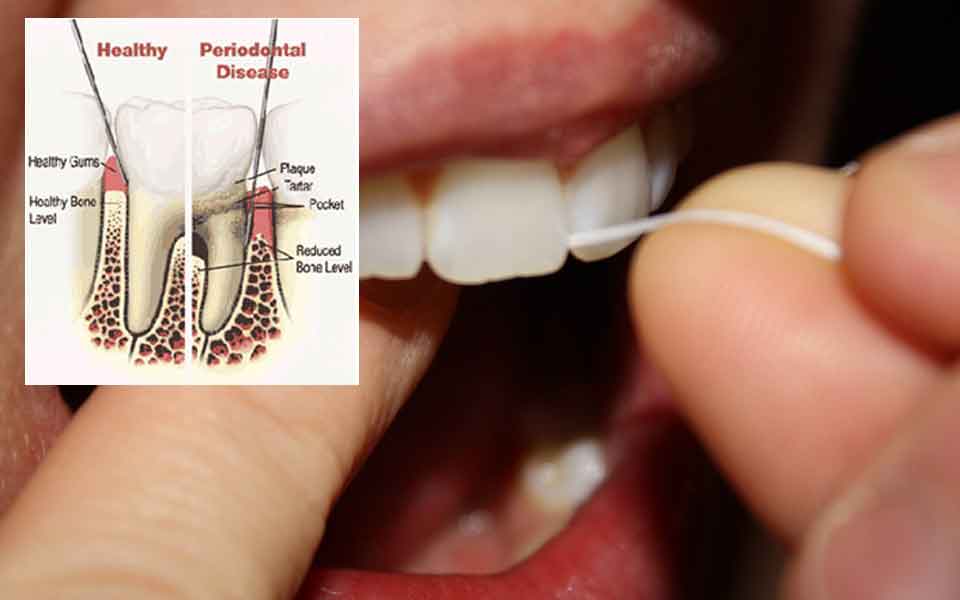
Without proper oral hygiene, bacteria build up at the base of the teeth. At an early stage -- gingivitis -- gums are tender and bleed easily, but teeth are firmly planted.
If the inflammation continues, the gum pulls away from the base of the tooth, creating small pockets that collect food debris, which putrefies. The bacteria work deeper along the edge of the tooth as the plaque extends below the gum line, creating an inflammatory reaction that tears apart connective tissue holding the teeth. Even the surrounding bone is destroyed. The tooth, no longer anchored, loosens and comes out, just like one of Granddad's fence posts.
Some say, "So what if my teeth fall out? That's what dentures are for!" But research shows poor dental hygiene contributes to serious illness.
For example, it used to be assumed that diabetics would have gum disease because diabetes harms immune systems. But it works both ways: Toxins from gum disease produce chemical reactions that impair the function of the pancreas, directly aggravating diabetes.
And it hits your heart. A study in the "Archives of Internal Medicine" in May evaluated the relationship between gum disease and C-reactive protein, an inflammatory marker associated with hardening of the arteries. In the study, 5,000 healthy middle-aged adults from four cities got oral exams. Those with the most periodontal disease also had higher levels of C-reactive protein. Obese participants had high levels regardless of gum health.
The responsibility for good dental health belongs to you. The plaque that causes gum disease is primarily a result of poor habits. Not brushing and flossing on a daily basis makes it easier for bacteria to build up. Smokeless tobacco contains not just carcinogens, but also a sugar smorgasbord for bacteria living in your mouth. Smoking affects the small blood vessels to the gums, impairing the flow of nutrients and making it difficult for the gum to repair itself.
Also, medications that dry the mouth decrease saliva production, so bacteria are not washed away from the teeth regularly. Medications and illnesses that impair the immune system can aggravate gum disease.
Preventive maintenance of your teeth and gums requires time and effort each day, but the benefits are worth it. You'll have a dazzling smile and pleasant breath, and your heart may thank you, too.
Ted Mitchell, M.D., directs the Wellness Program at the Cooper Clinic in Dallas.Joel C. Scalera D.D.S., P.A. © Copyright 2012. All Rights Reserved.